
Send in the Clones
Top 10 Best Video Game Replacement Characters of All Time!
This list looks at gaming’s most notable replacement players. Some of these characters were introduced due to creative changes. In other instances, new characters were called into action due to legal woes, expired licenses, or corporate drama. Some of these character swaps were seamless while others were hilariously awkward. Whether they were dodging lawsuits or merely shaking things up for a sequel, these suspiciously similar substitutes had big shoes to fill.
Examples: Curly Joe, Cindy Snow, Winston Bishop
10
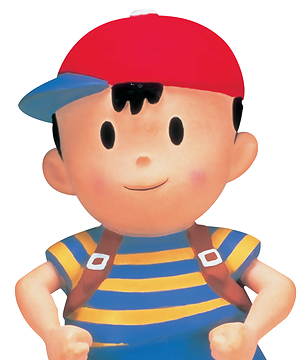
Ness
EarthBound
Mother 2 began as a hybrid sequel/remake, so it’s not surprising that the protagonists would have a lot in common. Ninten and Ness are two adventurous young boys living in suburban neighborhoods. They both wear red hats and striped shirts, and they both arm themselves with innocuous weapons like yo-yos and baseball bats while honing their latent psychic abilities. Their adventures mirror each other too, and they’re both tasked with collecting melodies from around the world. Even though canon confirms they’re distinct characters, creator Shigesato Itoi has suggested that you can see them as the same kid if you want to. Ninten didn’t get nearly as much exposure as his successor, and his creator has given us permission to merge them together in our minds. It seems as though Ness completely stole Ninten’s (PK) thunder.
9
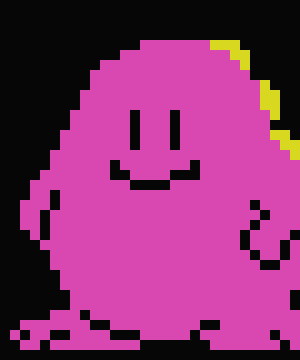
Wrappy
Q*bert
Q*bert is one the most iconic stars of the golden age of arcade games. Even though the armless creature was tremendously popular, Konami saw fit to replace him when they brought the franchise to the MSX in 1986. This version (loosely based on the Q*bert sequel) featured the same cube-hopping gameplay that we had come to love, but Q*bert himself was MIA. In his place was an expressive dragon named Wrappy, who was something of an internal mascot for Konami’s MSX development team. Oddly, the game was still called Q*bert despite the fact that Q*bert was nowhere to be seen. Changing the title character without changing the title itself is a bold move. While Q*bert had an inclination to curse, Wrappy would cry like a baby when things went awry. Perhaps that’s why he was never seen again.
8
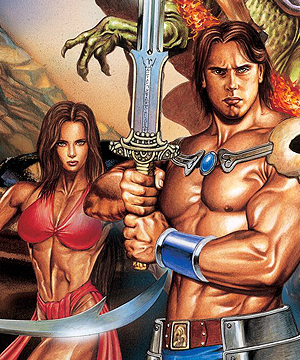
Kain Grinder & Sarah Barn
Golden Axe III
Without question, the heroes of Golden Axe III are the least successful replacement characters on this list. The hulking swordsman Kain Grinder is the splitting image of Ax Battler from previous Golden Axe games, and his moveset is nearly identical. Likewise, Sarah Barn bares a striking resemblance to Tyris Flare with her rocking abs and the same affinity for fire magic. I’ll concede that the characters in question are based on generic fantasy archetypes, but many fans were unaware that the protagonists in Golden Axe III were meant to be new characters. When the game was released on Nintendo’s Virtual Console in 2007, the manual erroneously referred to Kain Grinder and Sarah Barn as Ax Battler and Tyris Flare respectively! Kain and Sarah were so unimaginative that nobody even realized they were new characters.
7
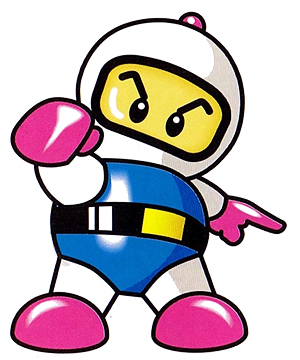
Bomberman
Bomberman
When fans talk about Bomberman, they’re almost certainly referencing his iconic “White Bomber” iteration. This lovable bomb-placing hero can be defined by his white helmet and adorable antenna. He was established as the protagonist in the 1985 Famicom port of Bomberman, but the design was first used for the robotic enemies in in 1984 Famicom port of Lode Runner. The original versions of Bomberman were released for Japanese computers in 1983, however, so they pre-date the White Bomber design by over a year. The nameless hero of these games had no backstory or lore, however, and the most interesting aspect of his personality was the fact that he wore a hat. The game’s developer has openly admitted that the character was uninspired, so it’s not a big surprise that he was replaced by someone with more charisma.
6
Nameless
The King of Fighters 2002 Unlimited Match
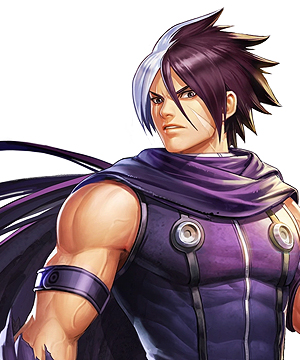
In The King of Fighters 2001, K9999 was introduced as an unstable clone of Kyo Kusanagi. He could also be viewed as an homage to Tetsuo Shima from Akira, and they shared the same fashion sense, fighting styles, and personality traits. (Heck, they even had the same voice actor!) When the game was updated for modern consoles in 2009 (as The King of Fighters 2002 Unlimited Match), K9999 was replaced with Nameless. Nameless was also a clone, but he was more mild-mannered than K9999. Although there was a lot of overlap between their movesets, all of the Akira references were dropped when Nameless hit the scene. K9999 was not only replaced, but he was effectively nuked from existence by SNK’s concerted erasure campaign. Nameless is a lot more sympathetic than his predecessor, so I see this as an absolute win.
5
Koopa Troopa
Super Mario Bros.
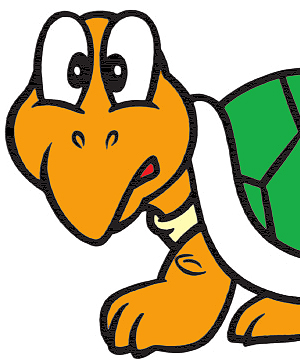
The original Mario Bros. featured turtle-like enemies called Shellcreepers. If they were flipped over, their shells could be kicked into other enemies. Two years later, Super Mario Bros. introduced Koopa Troopas, who had a similar role. (Naturally, Koopa shells could also be weaponized.) Koopa Troopas became a staple of Mario’s adventures while Shellcreepers were seldom seen again. It should be noted that the original Mario Bros. was given a number of follow-ups – including Mario Clash on the Virtual Boy and the two-player minigame from Super Mario Bros. 3. Even in these outings, Koopa Troopas were given the spotlight instead of Shellcreepers! Worst of all, the Koopa Troopas have effectively replaced Sheelcreepers in our collective memories! Bigots insist that all turtles look the same, and most fans can’t tell the difference either!
4
Master Higgins
Adventure Island
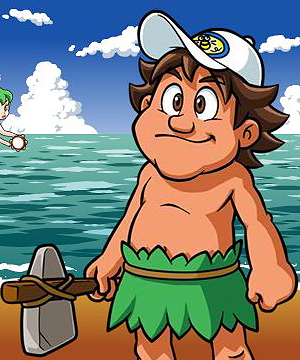
The tangled histories of Wonder Boy and Adventure Island have already been discussed elsewhere on this website. In review, Sega owned the Wonder Boy character designs, while Escape/Westone owned the code itself. The code was licensed to Hudson, who then released it as Adventure Island on Nintendo platforms. The core gameplay mechanics were largely unchanged, but the characters were altered due to licensing restrictions. Most notably, the heroic caveman Tom-Tom was replaced by an islander named Master Higgins, who was modeled in the likeness of Hudson’s own Toshiyuki Takahashi. Although Master Higgins replaced Tom-Tom in this outing, Wonder Boy and Adventure Island were both given a number of distinct sequels. Higgins didn’t erase Tom-Tom completely, and they both lived in prosperity. Everyone’s a winner!
3
Balrog
Street Fighter II
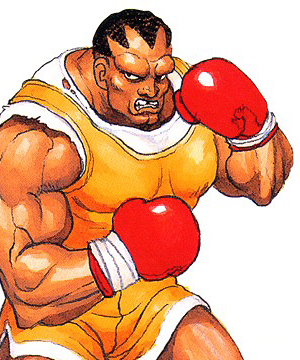
The original Street Fighter features a disgraced African American boxer named Mike whose repertoire is comprised entirely of punches. The sequel features a disgraced African America boxer named Balrog who also relies on fisticuffs. The characters have similar hairstyles, they’re both missing teeth, and some of their moves are nearly identical. They even have the same name! It’s widely known that Balrog was named M. Bison in the Japanese version of the game, and the M stands for Mike. Incidentally, Capcom decided to change his name to avoid litigation. His design was clearly inspired by Mike Tyson, and it would be hard to claim plausible deniability if he was named Mike Bison. The original Mike is little more than a footnote today. Balrog stole his gimmick and his place in history, and then he changed his name.
2
Mr. Dream
Punch-Out!!
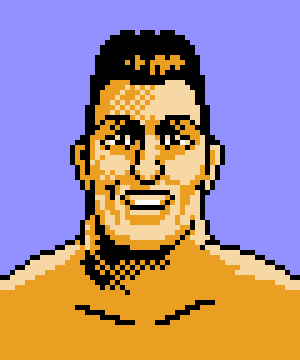
When Punch-Out!! landed in arcades in 1983, it stood out because of its compelling cast of original characters. Nintendo decided to add Mike Tyson to the mix when the game was ported to the NES in 1987, and secured a three-year licensing agreement for his name and likeness. The boxing phenom’s shocking lost to Buster Douglas in 1990 diminished his star power somewhat, so Nintendo decided not to pursue a new deal. Instead, they replaced him with a “new” character named Mr. Dream. Mr. Dream had pale skin and a redrawn face, but he kept Tyson’s repertoire, movement patterns, and even his quotes! As if replacing Iron Mike wasn’t egregious enough, he also stole Mr. Sandman’s gimmick in the process. Sandman was the final boss in the original arcade version, and he had been threatening to send his opponents to dreamland for years!
1
Pac-Mom
Pac-Man Museum+
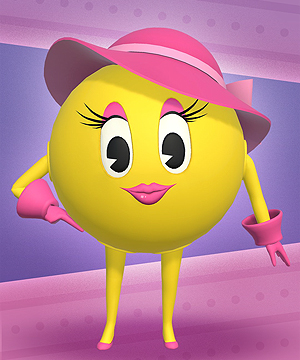
In 1981, General Computer Corporation created an unauthorized hack of Pac-Man called Crazy Otto. Midway purchased the rights and rebranded it as Ms. Pac-Man without Namco’s approval. Namco eventually acquired the trademark from Midway, while GCC secured lifetime royalties via a 1983 settlement. Namco promoted Ms. Pac-Man for decades, and she was regarded as the First Lady of the gaming industry. As Namco was in the process of renegotiating royalty payments with GCC in 2019, AtGames swooped in and bought the IP out from under them! Namco wasn’t impressed by this development, so they introduced Pac-Mom to avoid royalty payments to AtGames. They meticulously removed her from re-releases and compilations, and Ms. Pac-Man was effectively replaced with a similar (though legally distinct) stand-in named Pac-Mom.
Do you agree with this list? Let us know what you think by leaving a comment below. Your opinion matters!