
Overdue Sequels
Top 10 Most Overdue Video Game Sequels!
It doesn’t seem fair. We get a new Madden game every year and there were two dozen Army Men games released between 1998 and 2010. In the meantime, there are countless examples of creative and inventive franchises that haven’t been heard from in years! I realize that some of the blame lies with consumers for not giving certain games the attention they deserve, but it’s criminal to see a company pull the plug on a promising franchise before it had the chance to reach its potential. This list looks at ten sequels that are long overdue.
10
Rock n’ Roll Racing
MIA Since: Rock n’ Roll Racing (1993)
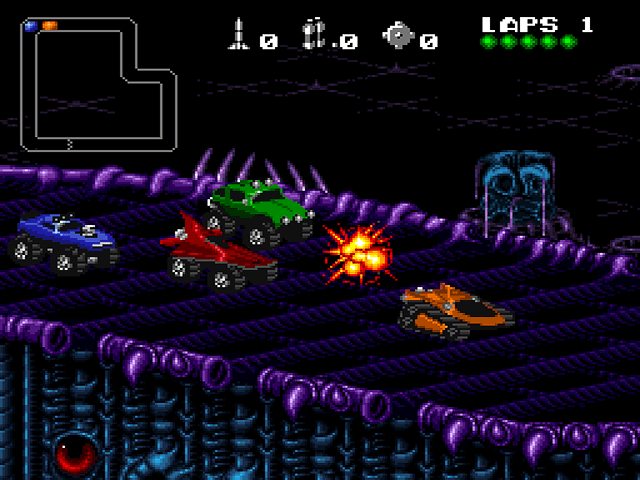
I don’t have anything against StarCraft, Diablo, or Overwatch, but I really wish Blizzard would do something nice for their fans from the 16-bit era. The gaming industry has come a long way in the past couple of decades, and there is so much more they could do with the Rock n’ Roll Racing series, especially as it pertain to the soundtrack and multiplayer modes. The original game boasted synthesized versions of five classic rock anthems. While this seemed impressive in 1993, a new version could easily be loaded with hundreds of songs from the actual recording artists. (This was the approach taken for the game’s “Definitive Edition”, which was released in the Blizzard Arcade Collection in 2021.) Two-player split-screen action used to be the bee’s knees, but online play could take the series to a whole new level. The closest we’ve come to a sequel was Interplay’s Red Asphalt, which was released in 1998. The game was known as Rock n’ Roll Racing 2 during the development stages, and released as such in PAL territories. Still, that game sucked and I like to pretend that it doesn’t exist. I’m still waiting for a real sequel.
9
Half-Life
MIA Since: Episode Two (2007)
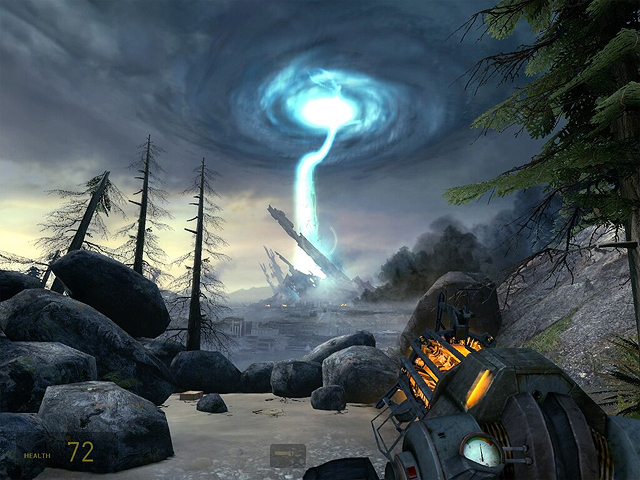
Released in 1998, Half-Life was a landmark first-person shooter. In a genre that traditionally focused entirely on action, Half-Life was known for its compelling storytelling elements. The environments were highly interactive, the levels were infused with puzzle elements, and players could actually talk to other characters instead of simply blasting everyone away. Half-Life 2 was built around these same concepts, but it also boasted improved visuals, better enemy AI, and represented a new high point for narrative in an FPS. A vastly improved physics engine also helped Half-Life 2 trump its predecessor, and the ability to pick up and throw objects with the new gravity gun accentuated how interactive the environments really were. The game received numerous “Game of the Year” awards in 2004 and fans anxiously anticipated the sequel. The 2007 release of Half Life 2: Episode One picked up where Half Life 2 left off and Episode Two helped satiate gamers even more. The episodic model adopted by Valve led many fans to assume that Episode Three would be arriving in the near future. Indeed, Valve originally intended to release new episodes every six to eight months. Concept art of Episode Three was leaked in 2008, but the game itself was never released. Valve has basically been stringing their fans along for the better part of a decade without providing any real information about when (or if) Episode Three would be released. It’s probably safe to assume that the episode format has been dropped altogether, but either Half-Life 2: Episode Three or Half-Life 3 would be met with arms wide open. It’s just a shame that Valve can’t count to three. The VR-centric release Half-Life Alyx in 2020 was enough to satiate some fans, but it wasn’t the proper sequel that we were promised.
8
F-ZERO
MIA Since: F-ZERO GX (2003)
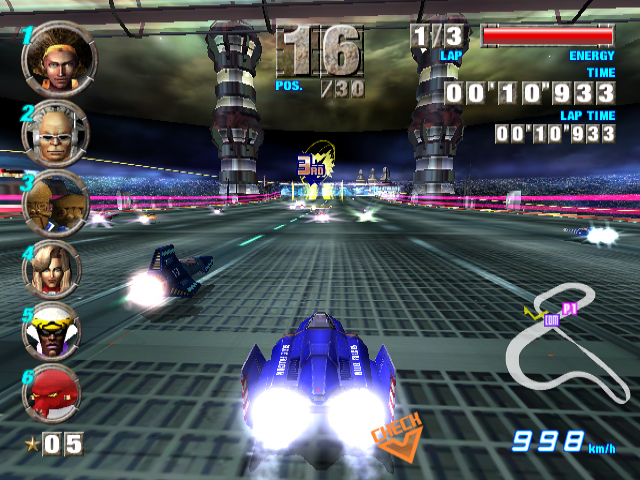
The original F-ZERO was effective in showcasing the impressive visual effects that the SNES was capable of. F-ZERO X for the Nintendo 64 was a technical marvel in its own right and ran at a solid 60 frames-per-second in an era where most games struggled to reach 30. With the 2003 release of F-ZERO GX on the GameCube, Nintendo handed the reigns over to Sega and we were treated to what was arguably the best game in the series. The game’s futuristic setting was even more over-the-top than it was in the Nintendo 64 version, and the tracks were filled with loops, half-pipes, cylinders, and jumps. F-ZERO GX was intensely challenging and incredibly competitive, and the game felt as much like an action game as it did a racing game. The F-ZERO games all did a great job of highlighting the strengths of their respective consoles, so it’s disappointing that Nintendo has chosen to neglect the series for so long. Fast-paced and futuristic racing games like F-ZERO are not as common as they once were, so the game would stand out even more in today’s era. The game is currently available to play on the Nintendo Switch 2 (providing you have an Online Expansion Pack), and we can only hope that there’s enough interest for Nintendo to finally pull the trigger on a sequel.
7
Eternal Darkness
MIA Since: Eternal Darkness (2002)
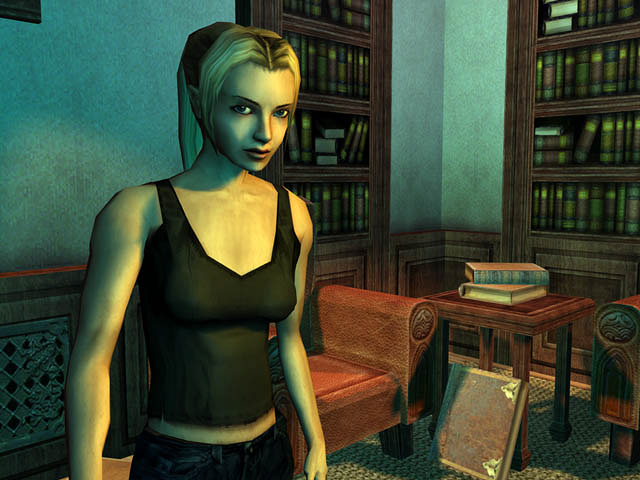
Eternal Darkness was one of the GameCube’s standout exclusives and arguably the most “mature” game ever published by Nintendo. The chapter-based story and innovative “sanity meter” made Eternal Darkness one of the most gripping survival-horror games ever created. As the player’s “sanity meter” depleted, they would experience a variety of insanity effects. The camera angles would change without warning, voices could be heard in the background, the volume would change on its own, blood would run down the walls, objects would fly across the screen, statues would move, paintings would transform, items would disappear from the inventory screen, and the game would pretend to erase the player’s save data. The game was overflowing with originality and introduced several interesting new concepts to the genre. Eternal Darkness is begging for a sequel. The game would be a great fit for the Nintendo Switch 2, and the new insanity effects could potentially change depending on whether you were playing in handheld or docked mode. Although Silicon Knights has disbanded, the game’s writer and director, Denis Dyack, has been attempting to make a spiritual successor for years. Nintendo has also renewed the Eternal Darkness trademark on several occasions, with the most recent filing taking place in December 2020. A proper sequel is still a possibility, albeit an unlikely one.
6
Dead or Alive
MIA Since: Dead or Alive 6 (2019)
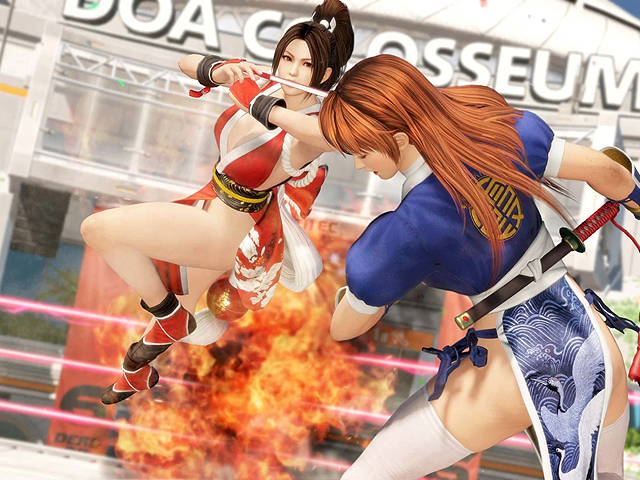
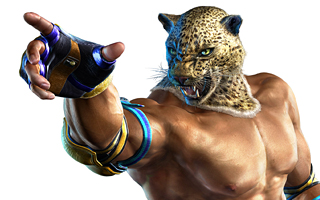
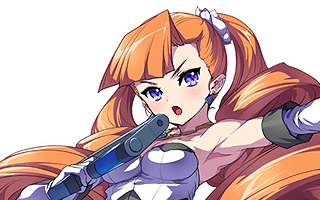
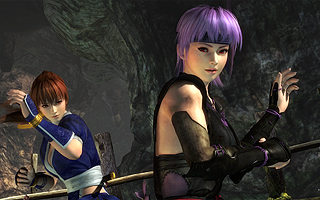
Dead or Alive hasn’t been dormant for as long as the other franchises on this list, but we have still been waiting over six years for a proper sequel to DOA6. (The series has been around since 1996, and we’ve never had to wait this long between sequels!) There is no indicaton that a sequel is around the corner, and some outlets have reported that Koei Tecmo quietly shelved DOA7 due to the underwhelming performance of DOA6. This is tragic for a number of reasons. The Dead or Alive games are consistently great, and I appreciate how each entry brings something new to the table. The series has always emphasized style and fun, and it boasts some of the greatest character designs in the history of the medium. It’s a shame that so many people dismiss it as a shallow franchise, given how deep the combat is. I can understand why DOA6 rubbed people the wrong way, but it had a lot of things going for it. Strategic gameplay? Interactive stages? A rewarding countering system? Hot sluts? It was all there. Unfortunately, the game was brought down by some bizarre design choices. Unlocking new outfits was aggressively unfun, and the game’s director has admitted that the sexual themes were toned down due to western influences. The missteps of DOA6 would be easy to correct, however Above all else, there’s no reason to appease people who will never be fans of the series. If Koei Tecmo would focus on their actual target audience, there’s no reason why DOA7 couldn’t be successful. Venus Vacation is tremendously profitable despite being a niche game, for instance, and many DOA cast members are popular enough to be featured as guest characters in other games.
5
Tomba!
MIA Since: Tomba! 2 (1999)
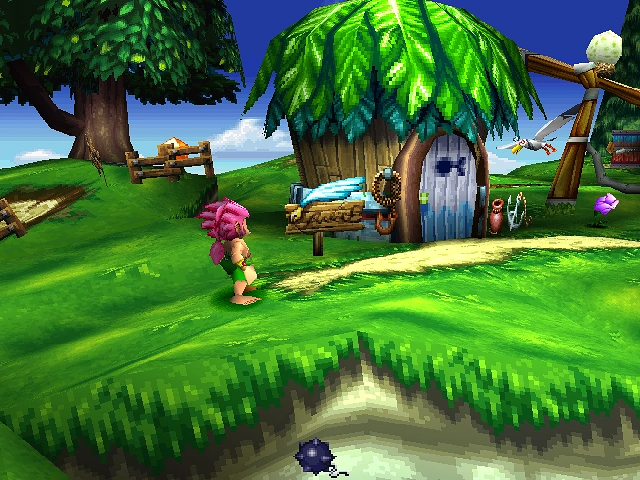
With gritty M-rated games like Metal Gear Solid, Resident Evil 2, and Silent Hill hitting the market in the same year, Tomba! stood out when it was released in 1998. Sadly, many gamers were too caught up in their “too cool for school-ness” to notice how brilliant the game was. It was arguably the best platformer on the PlayStation, but Tomba! only sold moderately well. Evidently, one look at the bright and colorful visuals was all it took for many to write poor Tomba off altogether. Those who actually gave the game a chance found endearing characters, memorable environments, and classic gameplay. Even though the sequel failed to live up to the original, I still see tremendous potential in the series. Although it not likely that we’ll ever see a sequel, the game’s producer (Tokuro Fujiwara) worked alongside the folks at Limited Run Games to deliver a “Special Edition” of the game in 2024. The sequel was given similar treatment, and could potentially introduce the series to an entirely new generation of gamers. If the special editions can drum up enough interest, there’s an outside shot that a sequel might emerge.
4
Chrono Trigger
MIA Since: Chrono Cross (1999)
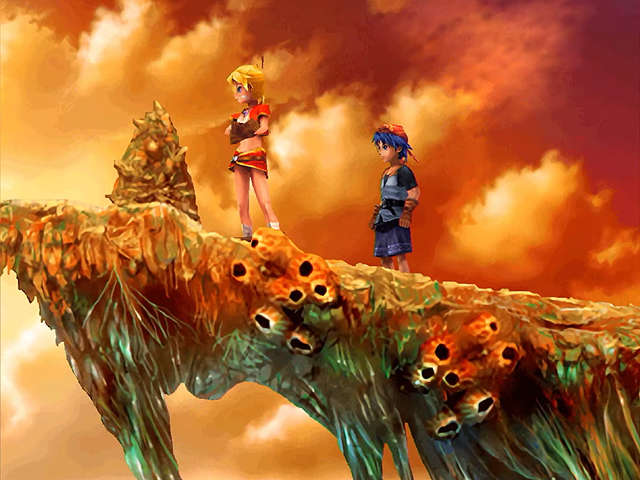
Chrono Trigger is possibly the single greatest RPG ever created and many consider it to be the perfect game. For obvious reasons, the expectations were ridiculously high when its sequel was released five years later. Whether or not Chrono Cross lived up to the original is debatable, but it was still one of the best RPGs of its era. Both games had beautiful visuals, epic soundtracks, compelling plot twists, and unique approaches to random battles. It’s been over two decades since we’ve seen an entry into the Chrono saga. For comparison, we’ve seen over a dozen Final Fantasy sequels and spinoffs in that same time frame! I’m certainly not calling for Square Enix to whore out the Chrono Trigger franchise, but I don’t think one new Chrono game every couple of generations is too much to ask for. Many key figures at Square Enix have expressed their interest to develop a sequel, and Square Enix even registered a trademark for Chrono Break. However, it is extremely unlikely we will ever see one. Square Enix has evidently chosen to follow the money. Unfortunately, this means that they’ll continue to focus their attention on more popular franchises like Final Fantasy and Dragon Quest.
3
Darkstalkers
MIA Since: Vampire Savior (1997)
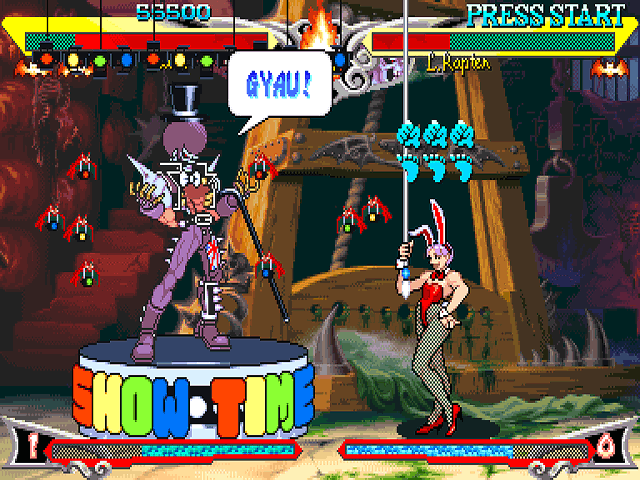
Darkstalkers and its sequels are among the most fluid fighting games ever created, both visually and mechanically speaking. Although the series used Street Fighter II as a template, it introduced a litany of new gameplay features like air blocking, crouch walking, and chain combos. It also had a unique art style and a colorful cast of characters lifted from classic horror movies and traditional folklore. The series isn’t bound by realism, and the moves wouldn’t be out of place in a cartoon. Street Fighter Alpha and X-Men: Children of the Atom also used an anime-inspired art design, but Darkstalkers was the most over-the-top fighting game in Capcom’s pantheon. Unfortunately, there were only three proper entries in the series, and we haven’t seen a “from-the-ground-up” sequel since Vampire Savior was released in 1997! We’ve gotten a few compilations since then, however, and the Darkstalkers characters have appeared in various crossover titles. This has helped the characters retain a certain level of relevance, but it’s a shame the series wasn’t able to evolve in a more meaningful way. The pixel art is somehow more impressive now than it was in the ’90s, and I think the style would really stand out in today’s market. The original cast is still celebrated decades later – and rightfully so – but I would love to see new characters brought into the fold. Although the series has a ton of untapped potential, I’m not holding my breath for a sequel. Apparently, the aforementioned compilation titles weren’t successful enough to warrant a new entry. Further proof that the customer isn’t always right…
2
Blast Corps
MIA Since: Blast Corps (1997)
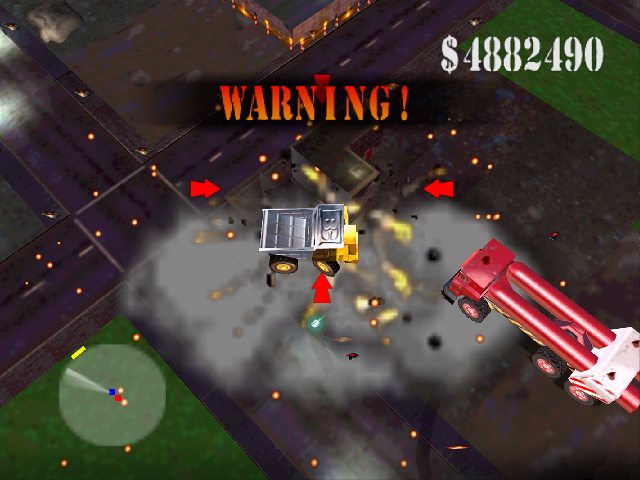
It wasn’t initially clear who got custody of Blast Corps after Nintendo and Rare divorced, but it turns out that Microsoft deserves the blame for not making a Blast Corps sequel. (In fairness, I’m not entirely sure that the game even needs a sequel. After all, the replay value on the original is nearly infinite and I still play the game on a semi-regular basis decades after its release.) Still, I’ve always thought Blast Corps would make for a great multiplayer game. It would be a fantastic cooperative experience, and deciding which player uses which vehicle would add another layer of strategy to the game. Of course, Blast Corps would make for one heck of a competitive game as well, and I can only imagine how awesome it would be to switch from one vehicle to the next in an attempt to destroy your opponent. Knocking down buildings is fun, but using a robot to crush your friend as he frantically tries to escape in the A-Team van sounds even more fun. The release of Rare Replay introduced a new generation of gamers to Blast Corps, and the game’s also available to Nintendo Online subscribers. Blast Corps would be the perfect showcase for Microsoft’s “eVeRyThInG’s aN xBoX” campaign, but I doubt any of the higher-ups at Xbox even realize that the game exists.
1
Banjo-Kazooie
MIA Since: Banjo-Tooie (2000)
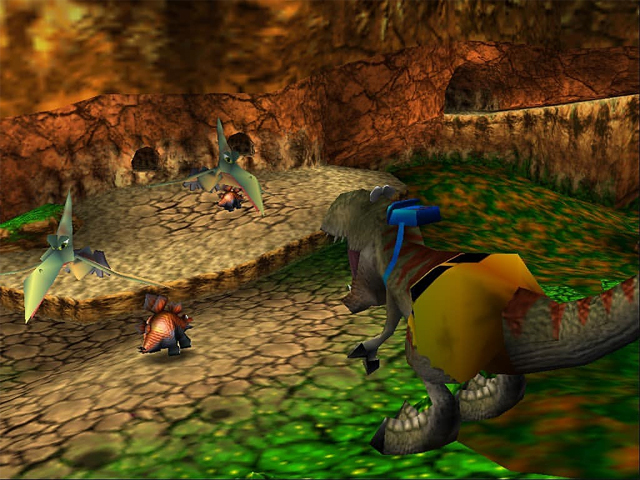
Banjo-Kazooie: Nuts & Bolts is a misunderstood game that probably deserves more love than it got. The whole “vehicle customization” angle was an interesting approach, and anyone who grew up with LEGO should be able to appreciate the gameplay mechanics. At the same time, I understand why people look at the game with such disdain. Nuts & Bolts has little semblance to previous Banjo-Kazooie titles, and anyone who was looking forward to another epic platform adventuring game was tremendously disappointed. It was a completely different type of game that appealed to different sensibilities. (Instead of learning new moves to progress through the game, players had to build vehicles and complete in various challenges.) Fans were expecting big things from the first original Banjo-Kazooie game released on a non-Nintendo system, but Microsoft didn’t seem to have a lot of faith in the series. Designer Gregg Mayles thought that the genre had become “stale” and insisted that “the Banjo of yesteryear has no real place in tomorrow’s market on the Xbox 360.” There was a time when Banjo-Kazooie was considered Super Mario 64‘s equal, and it’s unfortunate that the series didn’t evolve in the same way. We were never given a Banjo equivalent to Super Mario Galaxy or Super Mario Odyssey, and the series wasn’t given a proper chance to grow. Microsoft has basically ignored the series since 2008, and we’ve been waiting since 2000 for a true sequel to Banjo-Tooie. The unbridled enthusiasm surrounding Banjo and Kazooie’s arrival in Super Smash Bros. Ultimate should make it patently clear that the fans still care about the series.
Do you agree with this list? Let us know what you think by leaving a comment below. Your opinion matters!