
To the Ends of the Earth
Top 10 Best Post-Apocalyptic Video Game Worlds of All Time!
This countdown looks at gaming’s most noteworthy post-apocalyptic worlds. While the specific circumstances change from one game to the next, these entries give us a glimpse into how life might adapt after being devastated by warfare, natural disasters, alien invasions, or even supernatural meddling. This list will examine how geography is altered and infrastructure is destroyed, but a greater emphasis will be placed on the civilizations, technologies, and personalities that emerge from the rubble. The worlds on this list serve as backdrops for survival, and they ask what we become when the familiar is gone.
Examples: Mad Max, The Planet of the Apes, The Terminator
10
The American Southwest
Wasteland
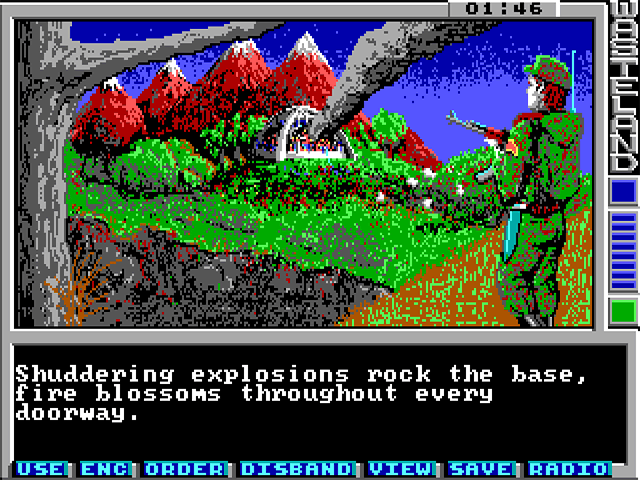
The Wasteland games take place in a post-nuclear American Southwest. In 1998, a 13-minute global nuclear exchange destroyed most of civilization after the U.S. Citadel Starstation issued a false report of incoming Soviet missiles. Long after both sides launched their warheads, it was revealed that a pre-war AI at Base Cochise engineered the false alarm. By 2087, the landscape is defined by irradiated deserts, mutated wildlife, leftover military robots, and scattered human enclaves that are barely scraping by. Survivors live in isolated towns, nomad camps, and fortified ruins. Since resources are scarce, raiders, cults, and warlords pose a constant threat. The player typically assumes the role of Desert Rangers who descended from a U.S. Army Corps of Engineers unit. (After the Great War, this group seized a prison and evolved into self-appointed protectors striving to keep a fragile peace.) Wasteland could be viewed as the creative ancestor of the Fallout series in many regards. Both franchises are set in post-apocalyptic open worlds and feature turn-based combat. They also share a sense of humor, and they pair grim material with dark levity. Fallout ultimately made a bigger impact (pun intended), but Wasteland deserves tremendous credit for its creativity.
9
Kanto Region
Pokémon Pokopia

Pokémon Pokopia is a cozy life-sim set in a ruined Kanto after humanity has disappeared. Climate disasters and the threat of global famine made the planet uninhabitable, so humans were evacuated into space. Most Pokémon were unable to go with them, so they were stored in a massive computer system designed to automatically release them once the environment became stable again. By the time the system was triggered, humans had long departed. With a Ditto awakens in an abandoned wasteland, it takes on a human-like form based on memories of its trainer. At this point, it sets out to restore the region so the Pokémon population can recover. The Pokémon adapt by returning to the places that suit them, and communities form around the new habitats you create. As more information becomes available, the Ditto slowly unravels the mystery behind humanity’s disappearance. Pokémon games usually treat the trainer–Pokémon bonds as the emotional core, so it was surreal for Pokopia to be set in world devoid of humans. The mix of post-apocalyptic lore with Animal Crossing-style comfort is a notable departure from the usual catch-and-battle formula that the series is known for. The tone stays gentle in spite of the grim undertones, however, and the Kanto ruins become a canvas for friendship, farming, and comfy world-building.
8
The Future, 2300 A.D.
Chrono Trigger
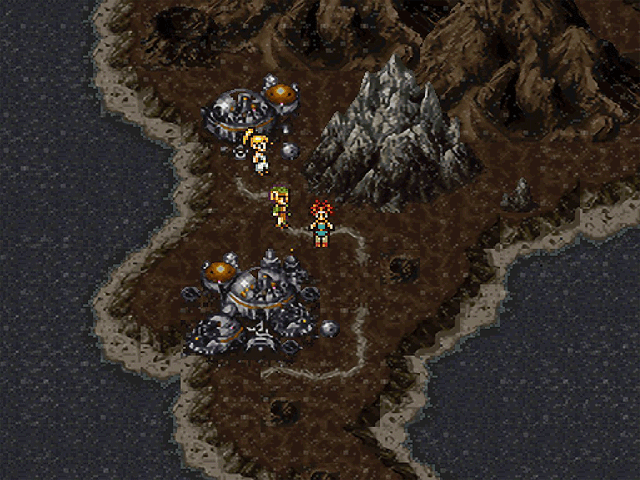
Chrono Trigger begins in the year 1000, with the whimsical Millennial Fair acting as the backdrop. After a scientific demonstration goes sideways, Crono is transported to the Middle Ages. Although he returns home safely, he’s wrongfully imprisoned and accused of kidnapping a princess. Crono makes his escape with the help of his friends, but the group is forced to step into an unstable time gate in order to evade the castle guards. In an instant, they find themselves in the year 2300. To put it bluntly, the future kind of sucks. It’s a desolate wasteland populated by hostile robots and grotesque mutants. Meanwhile, the last remnants of humanity are starving, sick, and deeply depressed. Computer records reveal that the world was destroyed in 1999 by an alien parasite named Lavos who had emerged from underground. After repairing a deactivated security robot, the team decides to travel to the past in order to save the world. The visit to the future serves as the emotional turning point of the game. Up until that point, the party’s motivations were personal and self-interested. They were merely trying to survive, and their only goal was to return to their own happy lives. After learning about Lavos and seeing his destruction first-hand, they take on the responsibility to set things right. Their time-hopping adventures had been accidental and unintended, but the apocalypse inspired them to become active protectors of the timeline.
7
World of Ruin
Final Fantasy VI
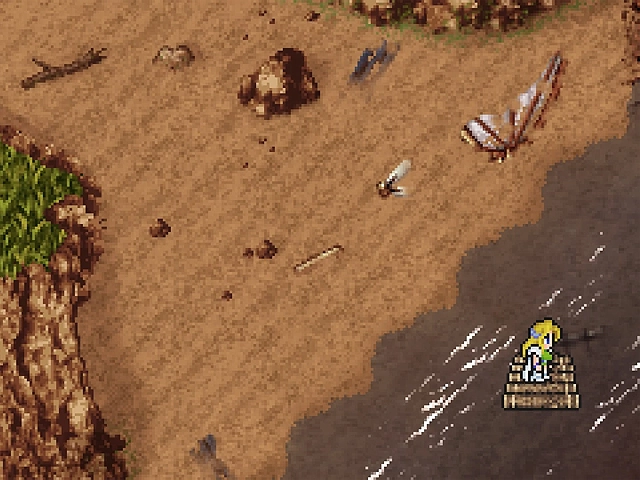
The World of Ruin in Final Fantasy VI stands out for many reasons. It’s not unusual for JRPG villains to threaten the world, but Kefka actually makes good on his threats. After seizing power and becoming a living god, he fractures continents and creates waves of ash, famine, and despair. When the story resumes, the world is broken and rearranged. Familiar towns are devastated, the party is scattered, and the tone shifts dramatically. The first half of the game is relatively linear in its progression, but it transforms into something closer to an open-world RPG after the world is destroyed. After a few early reunions, you’ll be able to roam the globe at your discretion. You can decide if you want to re-unite with your friends, hunt optional dragons, or fly directly to Kefka’s tower for the final battle. This open-ended nature helps accentuate the lawless nature of the new world. There are no rules, guidelines, or central authority to dictate a path. The only order left is what you choose to impose. Many games employ post-apocalyptic settings, but few allow you to experience the world before it was laid to ruin. In Final Fantasy VI, you see the same people and places before and after the catastrophe, so the loss feels personal rather than abstract. Towns survive by whatever desperate means they can. Some sink into decadence or cult worship, while others scrape by in isolation or fear. Since Kefka actually achieves his goals, the second half becomes a story about whether hope still matters in a world that has already ended.
6
Alrest
Xenoblade Chronicles 2
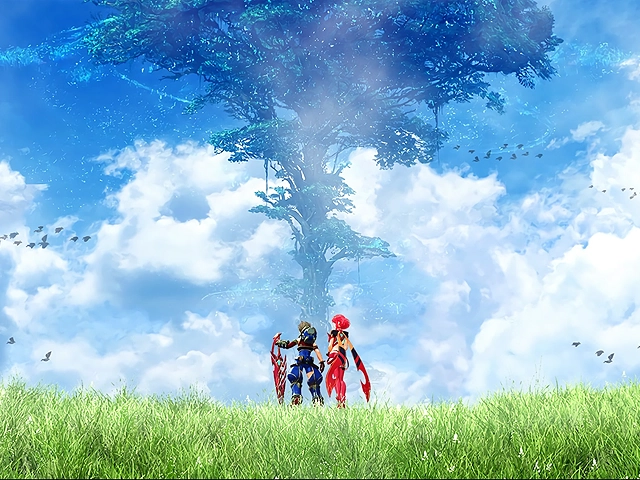
The world of Alrest is essentially a network of living Titans drifting atop an endless Cloud Sea. Civilizations, forests, and nations exist on (and within) these giant creatures. The Titans themselves slowly wither and die, creating scarcity, migration pressures, and political tension. This is treated as the natural order of things, however, and salvaging is a recognized trade. Divers plunge into the Cloud Sea and haul up mechanical relics, treasure, and materials that feed industry and daily life. Most inhabitants understand that ruins lie beneath the clouds, but they do not grasp the full picture of a prior planetary civilization. In effect, the world below had been destroyed by an ill-advised experiment that shattered existence itself. Most of the planet vanished into other dimensions, and the surface suffered severe damage. The scientist who had caused the rift created the Cloud Sea as a restorative medium that could rebuild matter, spawn Titans, and foster new life. The people of Alrest know only the religious legend that humanity was once expelled from a paradise called Elysium. They are not generally aware that destroyed cityscapes rest under the clouds, nor do they realize that their entire world is a reconstructed remnant of a forgotten past. Since the catastrophe is not common knowledge, Alrest reads as high fantasy with a biological twist rather than an elaborate graveyard.
5
The Kingdom of Hyrule
The Legend of Zelda: Breath of the Wild
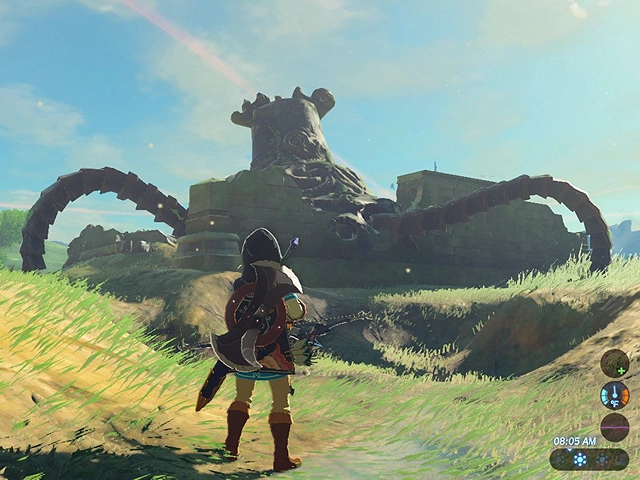
Breath of the Wild takes pace a hundred years after a great calamity laid waste to the Kingdom of Hyrule. Nature has now reclaimed the kingdom, and the remnants of a past civilization sit under moss and vines. The ruins themselves do most of the storytelling, and overgrown landmarks let players reconstruct what happened. The world is void of civilization in many places, but it’s never barren. The large distances between points of interest create scale and solitude, and discoveries feel earned since they’re given time to breathe. One of the reasons the world is so compelling is because Zelda had been around for several decades. Familiar locations from earlier games could be likened to faded echoes, and normal exploration felt like a form of archaeology. In typical post-apocalyptic stories, the world is mysterious to us, but not to the people inside it. Although details may still be uncovered, the survivors already have a working model of the disaster and the player is merely catching up. In Breath of the Wild, an amnesic Link wakes up with the same ignorance the player has. The kingdom’s collapse and his own collapse are the same unsolved problem, and players piece together the past in lockstep with him. The vast oceans in The Wind Waker and the corrupted Dark World in A Link to the Past are also examples of post-apocalyptic worlds, but Breath of the Wild felt more immersive since Link was reconstructing himself in the same motion that he was trying to reconstruct Hyrule.
4
The United States
The Last of Us
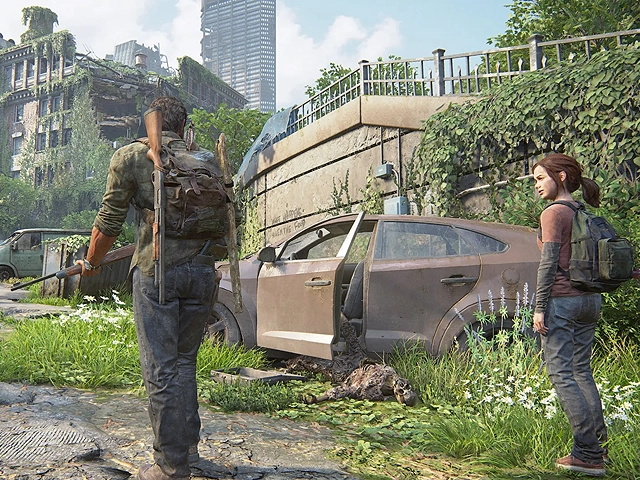
In The Last of Us, a mutated strain of the Cordyceps fungus jumps to humans and triggers a rapid global collapse. Victims lose higher brain function within minutes, and they progress through grotesque stages as the fungus consumes their bodies. Twenty years after Outbreak Day, the United States is a patchwork of crumbling cities, oppressive quarantine zones, and scattered settlements. Survivors ration food, and isolated communities try to rebuild something resembling ordinary life. Through it all, the game takes a grounded, character-first approach. The Infected are a constant environmental threat, but the danger and drama come from ordinary people making desperate moral choices. The world itself is strikingly lush, and the vine-covered infrastructure shows us that nature is visibly winning. Trees punch through roofs, and wildlife has returned to the empty streets. The beauty serves as a reminder that the world doesn’t end just because human civilization does. It just changes shape. In a similar vein, the story treats the collapse as a stage for an intimate father-daughter relationship instead of a backdrop for an endless shooting gallery. The refusal to treat survivors as simple heroes or villains makes the game feel like a lived-in character study rather than a typical zombie apocalypse.
3
Earth
NieR:Automata
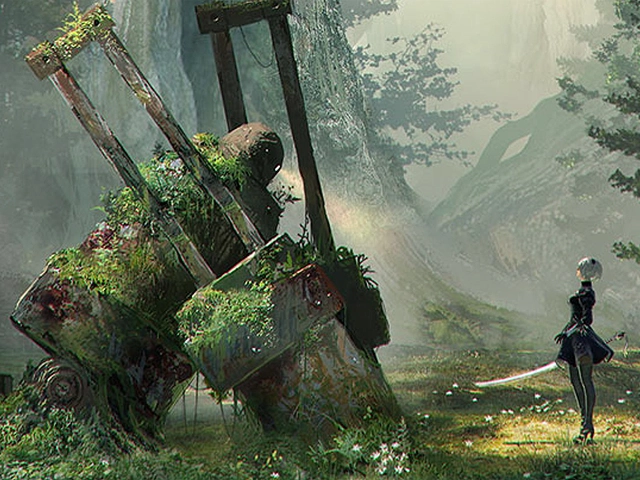
The NieR series unfolds on a ruined Earth that branched from one of Drakengard‘s endings. Essentially, a dragon crashed into into Shinjuku and dragged otherworldly particles into our reality. These particles created White Chlorination Syndrome, which either calcified victims or turned them into monsters. Sadly, nuclear strikes that were intended to contain the outbreak only managed to scatter the particles worldwide. Humanity’s last-ditch response was to wait out the plague by extracting souls (as “Gestalts”) and attaching them to immune replicant bodies. NieR:Automata jumps forward thousands of years. By this point, androids created to serve humanity are engaged in a proxy war against alien-made machine lifeforms. Ostensibly, the goal is for the androids to win the war and reclaim the planet for their creators. In reality, humans had already died out by this point. They were not driven to extinction by the alien invaders, however. Rather, they were wiped out at the end of NieR when the original Gestalt was compromised to a permanent end. Souls were unable to return to their bodies at this point, which effectively doomed the entire species. Even though Project Gestalt was a failure, an elite military force known as YoRHa spread the lie that humans had fled to the moon. This gave the androids a sense of purpose, and they continued to fight as though there were someone still left to save. Most post-apocalyptic stories focus on the survivors, but the NieR franchise explores what the world would look like if humanity died out. The core tragedy of NieR:Automata is that both sides have become so deeply sentient, emotional, and “human” that they are trapped in a cycle of destroying each other over ghosts and empty programming.
2
Tokyo
Shin Megami Tensei Series
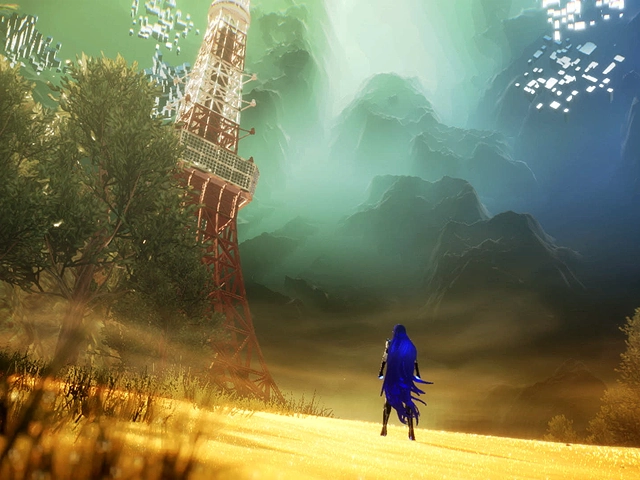
The mainline Shin Megami Tensei games use Tokyo as ground zero for an apocalypse, but the specifics change from one game to another. In the first SMT, Tokyo is leveled by ICBMs and the world is reduced to a nuclear wasteland. In the sequel, humanity has been forced into a stratified mega-city called Tokyo Millennium, built on top of the old ruins. SMT III is set within a separate continuity, however. In this outing, a cataclysmic event caused the entire planet to collapse in on itself like a sphere, transforming into a hollow Vortex World. The fourth entry focuses on a nuclear war meant to cleanse the earth. Tokyo was on the verge of being completely obliterated, so a guardian deity sacrificed himself to form a massive stone dome over Tokyo to shield the survivors. SMT V starts in modern-day Tokyo, but it’s soon revealed that the apocalypse occurred 20 years prior. The “modern Tokyo” was merely an illusion, while the real Tokyo sat ruined in the desert. Each game provides a unique spin on the apocalypse, but there’s connective tissue between them. The series is tied together by the collision of ancient mythology and hyper-modern civilization, and the games all focus on a conflict between law-aligned and chaos-aligned demons. Tokyo is the ideal backdrop, because it serves as a microcosm for humanity itself. Real-world landmarks anchor the supernatural chaos to reality, and seeing organized urban spaces suddenly decay into tribal battlegrounds highlights how fragile human civilization truly is. If nothing else, Shin Megami Tensei deserves points for creativity. It’s refreshing to see an apocalyptic story that doesn’t involve aliens, robots, or alien robots.
1
Post-War America
Fallout Series
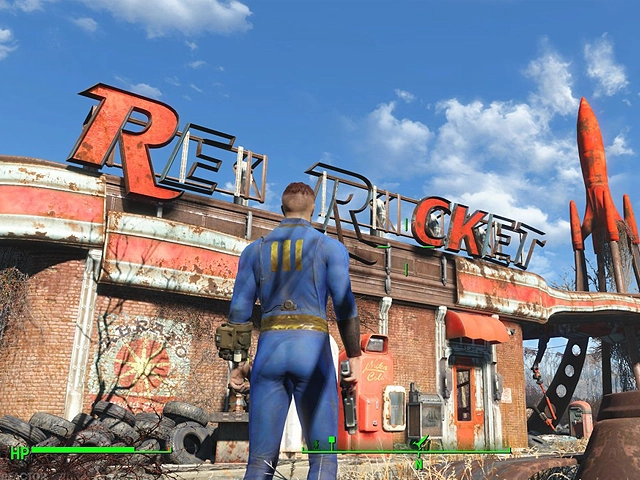
Fallout is set in an alternate timeline where the transistor wasn’t invented in 1947. Instead, atomic power serves as the foundation of scientific progress. In this world, nuclear-powered cars and advanced robots exist alongside vacuum-tube CRTs and other clunky 1950s technologies. Since the nuclear age allowed people to achieve the “American Dream” that had been promised in the mid-20th century, culture and social attitudes stalled in a permanent 1950s golden-age aesthetic… until the bombs fell in 2077. Incidentally, conflicts over resources led to a mutually destructive nuclear exchange between the United States and China. Centuries later, America is irradiated, but full of personality. The series relies heavily on satire and absurdist humor to critique mid-century American culture. While it tells serious stories with genuine emotional stakes, its identity is built on a sharp parody of Cold War propaganda, rampant consumerism, and blind patriotism. The games juxtapose the upbeat corporate messaging of pre-war America with the horrific reality of the wasteland, and corporations such as Vault-Tec are depicted as comically evil. (They didn’t build underground vaults to save humanity; they built them as psychological experiments to test human limits for the government.) The games span from the Mojave desert to the Eastern seaboard, and the universe feels lived-in and politically messy. As warring factions fight over the scraps of the old world, the series creates a unique tone that somehow allows for campy in-jokes to exist alongside tragic pieces of environmental storytelling.
Published: October 4, 2026
Do you agree with this list? Let us know what you think by leaving a comment below. Your opinion matters!