
Cut to the Chase
Top 10 Best Video Game Chase Scenes of All Time!
This list looks at the greatest chase scenes in gaming history. Whether you’re dodging a relentless horror movie monster or weaving through traffic in a high-octane heist, a great chase is defined by its kinetic energy and nail-biting stakes. Some of these sequences focus on cinematic elements, blending scripted spectacle with player-controlled chaos. Others focus on mechanical mastery, often demanding perfect timing and platforming. In either case, narrative value is an important consideration, and a well-paced chase scene can raise the emotional stakes and thematic depth of a game. The only criteria for this list is that each scene has to feature someone (or something) that is pursuing the player. Although you’re often racing toward an invisible finish line, the primary goal is to stay alive.
Examples: Mad Max: Fury Road, Jurassic Park, North by Northwest
10
Self-Destruct Sequence
Super Metroid
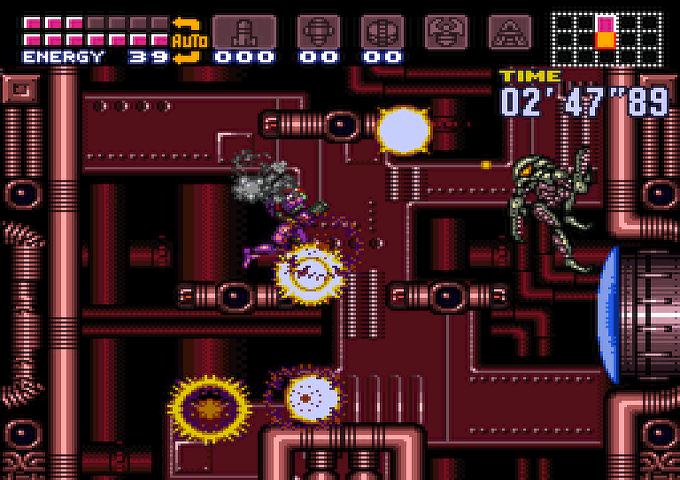
The final escape sequence in Super Metroid is the ultimate example of a victory lap. The sequence tests your skill, and it also serves as a cinematic payoff for everything you’ve achieved. Since the sequence happens after the final boss fight, your heart rate is already at an elevated state. After taking you on an emotional rollercoaster, the game immediately triggers a countdown. The sequence isn’t especially challenging, so your anxiety will be informed by the fear of losing your hard-earned victory. Blaring alarms and propulsive music create a no-rest atmosphere, while screen-shaking tremors and constant explosions mimic a collapsing core. Even though the platforming isn’t punishingly hard, the sensory overload makes every jump feel desperate. In a stroke of genius, the escape scene also functions as an unexpected nostalgia callback since it forces you to use the same shaft that was used in the original Metroid. The entire scene feels like a final exam, and they even managed to sneak in a pivotal character moment for Samus. The clock is ticking, but you can take a detour to save the animal buddies that you befriend during the adventure. This proves that Samus isn’t just a cold bounty hunter. The only reason why this sequence isn’t ranked higher on this list is because it feels more like an escape scene than a proper chase scene. Samus is technically being pursued by rising lava, however, so it still fits the criteria for this countdown.
9
Dahaka Pursuit
Prince of Persia: Warrior Within
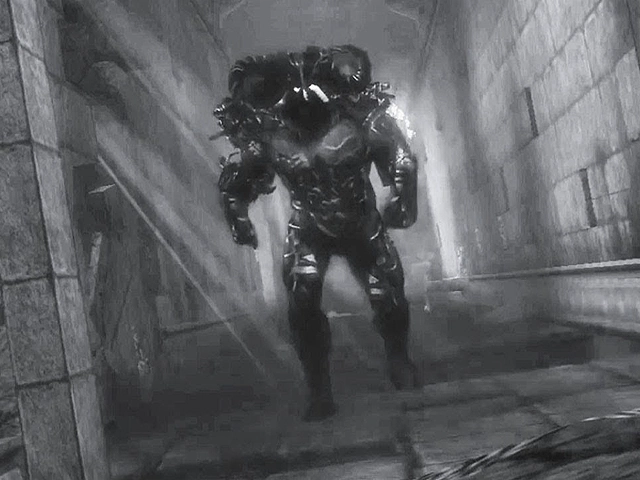
A lot of games use the concept of fate as a vague plot point, but Warrior Within envisions fate as a nine-foot-tall shadow beast that can walk through walls. The Dahaka pursuits reinforce the game’s central theme, and they remind us that actions have consequences. Because the Prince cheated death in The Sands of Time, the Dahaka’s presence makes the player feel the weight of that temporal debt every time the screen turns sepia and the angsty nu-metal music starts to play. (These artistic choices might seem out of place, but they feel like they are happening outside of time and emphasize that the Prince is being hunted by something that lives by a different set of rules.) To make your escape, you perform complex wall-runs, pole-swings, and ledge-jumps with zero room for error. The Dahaka’s inability to pass through water creates safe zones that provides a momentary gasp of relief, but there’s always an impeding sense of dread. You’ll be chased by the Dahaka on several occasions, but they all feel like they’re part of the same pursuit. Everyone knows that you can’t escape fate, so the monster is universal correction fluid that’s trying to erase the Prince from a timeline where he no longer belongs.
8
Un-Bearable
Crash Bandicoot 2
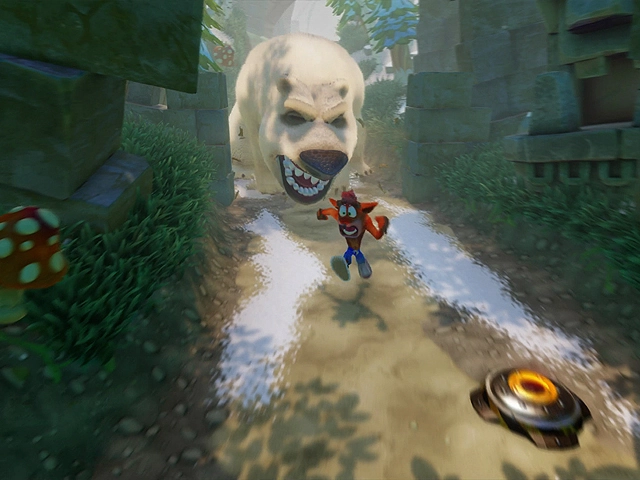
The first Crash Bandicoot borrowed heavily from Raiders of the Lost Ark and featured a number of sequences where Crash had to escape from rolling boulders while running toward the camera. “Un-Bearable” from Crash Bandicoot 2 is arguably the peak of the “forward-facing” chase genre because it changes the mechanic from a simple reflex test into a complex obstacle course with a genuine personality behind the threat. The boulder, while dangerous, is an inanimate object, whereas the snarling polar bear feels deliberate. The way it actively breaks through the environment makes it seem like a predator rather than a stage hazard. The level itself is smartly designed, and it requires you to juggle Crash’s entire move set. You spin through lattice fencing, slide under electrical barriers, and jump over pitfalls without losing speed. The final stretch allows you to ride a polar bear cub, and the pacing ramps up as a result. The speed boost arrows will force you to commit to a path instantly, turning the end of the level into a frantic finale that builds on the tension of the earlier foot-chase. It felt like a brilliant subversion when you got to ride on the adorable cub, as he contrasted so sharply with the terrifying beast that was pursuing you. The 2019 remake make the bear look even more intimidating, thanks to the fur shaders and enhanced lighting.
7
Wellspring Escape
Ori and the Will of the Wisps
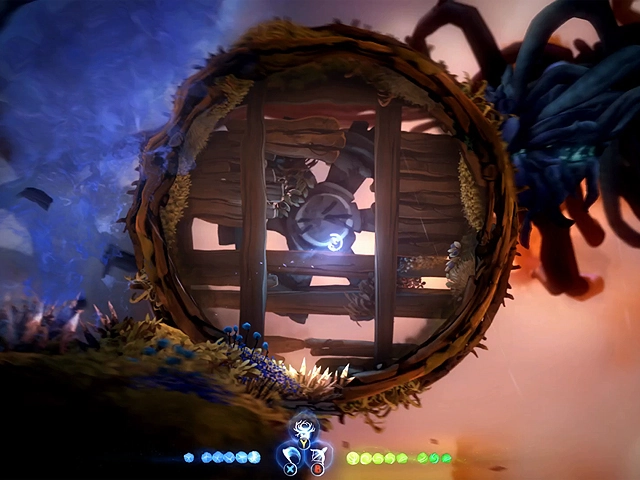
The first Ori game featured a memorable escape sequence involving rising water levels. The Wellspring Tentacle from the sequel is an active antagonist that feels more menacing. The Lovecraftian creature teases the player throughout the entire Wellspring area, making the final chase feel like an inevitable explosion. The way the beast weaves in and out of the background is an artistic feat, and it makes it feel like the world is closing in on you. It’s clear that your foe isn’t bound by the same set of rules that you are. Unlike the Ginso Tree’s vertical climb, the Wellspring chase moves in multiple directions. This requires the player to rapidly recalibrate their momentum, making the flow state much harder to maintain. Ultimately, the sequence feels like an exam for all of the skills you’ve been honing. The sound design is amazing throughout, and I love how the ticking-clock motif gives way to a brass-heavy orchestral swell. The music mimics the creature’s movements perfectly, with heavy crescendos when it lunges and fluttering woodwinds when you find a brief moment of air. The sandworm escape from later in the game is even more impressive from a pure platforming perspective, but the Wellspring was more memorable due to the theming. The Wellspring represents the restoration of life to Niwen, and its chase sequence makes you feel like you’re outrunning the rot itself.
6
Bag and Drag
Call of Duty: Modern Warfare 3
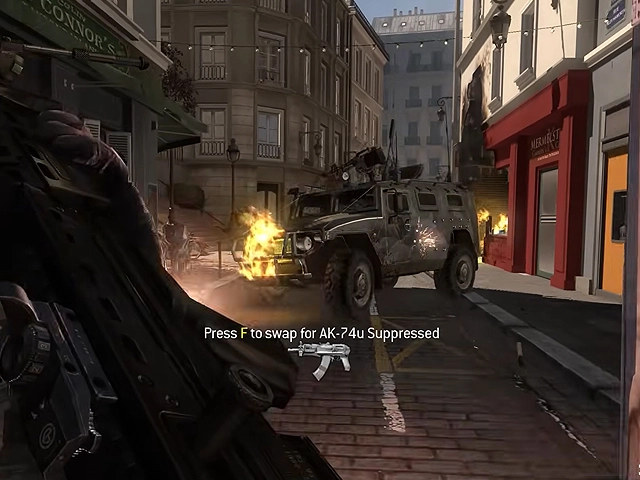
The climax of Modern Warfare 3‘s “Bag and Drag” mission is a brilliant example of directed chaos. Set in the narrow streets of Paris, it turns a standard capture mission into a high-stakes vehicular gauntlet. Assuming the role of a gunner, you’ll have to manage threats from every conceivable angle. Armored cars emerge from side streets and attempt to ram your van, helicopters track you from above and rain down fire, and a tank even emerges from an alley! If your van slows down, Russian soldiers will attempt to climb into the vehicle. The winding roads make you feel like you’re closed in, and the chase even takes you inside buildings. All the while, you’ll leave a wake of destruction behind you that heightens the tension. Something is exploding or collapsing in almost every frame of the three-minute pursuit. The chase ends just as abruptly as it begins, and you wind up ramming your target’s car through a fence and into a dumpster. This chase scene stands out on this list because of how it’s structured. During the scene, you’re chasing down a Russian terrorist while simultaneously being pursued by enemy forces. This creates a predatory sandwich, forcing the player to fend off numerous threats while keeping their primary objective in sight.
5
Glutton Chase
Little Nightmares
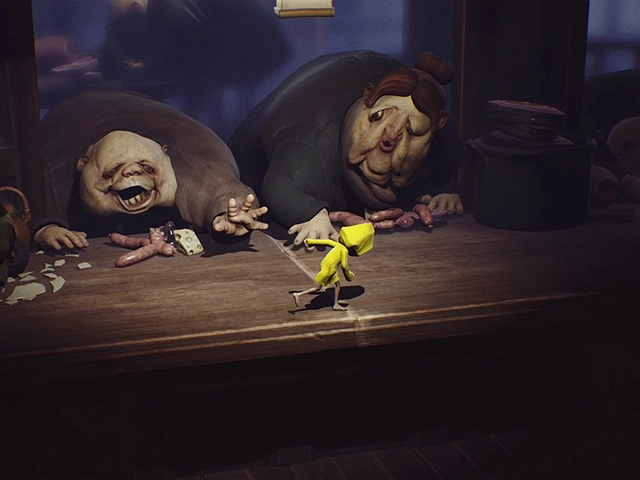
While some games use explosions to create tension, Little Nightmares uses the grotesque physics of the human body to create a skin-crawling revulsion. As our heroine sprints across long dining tables, dozens of obese, mask-wearing guests abandon their food to crawl, stumble, and lunge at her. It feels impossible to bypass the sheer number of grasping hands. Unlike a scripted truck or boulder, the guests have clumsy animations that make their reach feel unpredictable. They look like melted humans, and their sagging skin makes the player want to pull away from the screen. The haunting soundtrack blends the sounds of clattering silverware and wet chewing with a distorted heartbeat. The unpredictable camera angles make everything seem even more unsettling, and the screen often jolts or zooms in slightly mimic a panicked intake of breath. These disjointed camera movements make you feel like a frantic witness to your own demise. The sequence culminates with a desperate leap onto a hanging lantern as the guests pile up below you in withering mass of hungry monsters. This gives you a fleeting moment of relief, but you’ll be aware that you survived by the skin of your teeth.
4
Fire Escape… Escape
Resident Evil 3
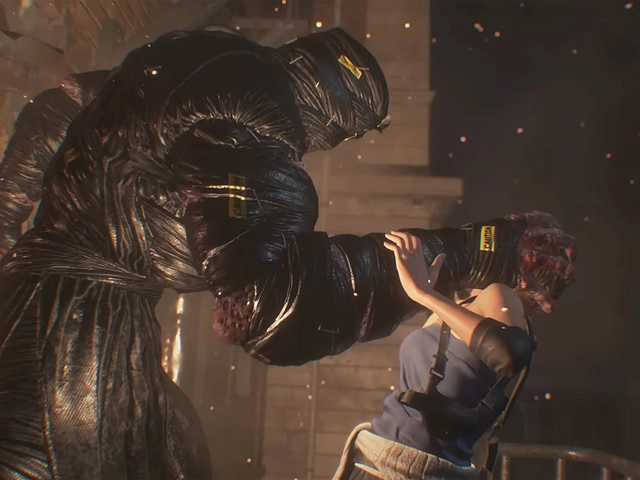
The opening of the Resident Evil 3 remake subverts the “safe room” expectation and throws the rules of the genre out the window. Most survival horror games slowly increase the dread factor as the game progresses. Resident Evil 3 rejects this, throwing you into a high-octane escape within the first five minutes. By making the chase the prologue rather than the finale, it establishes a state of permanent hyper-vigilance. It sets the tone for the entire game, as there is always the lingering threat of Nemesis bursting through a wall like the Kool-Aid man. Throughout the Resident Evil series, you’ll be pursued by mindless zombies, mindless giants, mindless statues, and mindless babies. Nemesis isn’t mindless, however, and he moves with deliberation. He pulls you back with his grappling tentacle, leaps over your head to cut off your exits, and utilizes weaponry like flamethrowers and rocket launchers. All the while, the newly-minted “Perfect Dodge” mechanic prevents you from feeling like a helpless victim. The opening escape through Jill’s apartment and across the Raccoon City rooftops showcases dynamic camera work that rivals the Uncharted series. As you scramble through a burning building, the narrow corridors and crumbling floors create a sense of claustrophobia. By the time it’s over, you’ll feel like you’ve been taken through a tour of a dying metropolis. The city itself is just as chaotic as the impromptu chase scene.
3
City Escape
Sonic Adventure 2
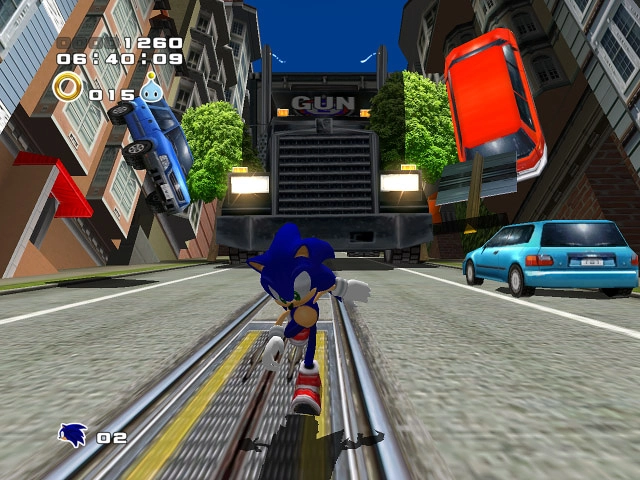
The City Escape pursuit from Sonic Adventure 2 perfectly represents the escalation of stakes that defined the early 3D era. The killer whale chase from the first Sonic Adventure was a brief, linear spectacle. City Escape, in contrast, is a full-length journey. You start with the iconic boarding sequence, which feels like a chill descent through San Francisco-inspired streets. The sudden appearance of the G.U.N. truck acts as a jolt to the system, transforming a breezy joyride into a desperate survival sprint. The truck could be likened to an unstoppable juggernaut, and it plows through cars, barriers, and buildings. This gives it a sense of danger that the killer whale lacked. Because the camera is often fixed in front of Sonic, you’re forced to stare directly at the grill of a massive machine that fills 80% of the screen. It creates a claustrophobic tension that forces you to perfect your movement to stay ahead. Jun Senoue’s iconic theme song is the X-factor, and the driving bassline and upbeat lyrics sync perfectly with the rhythm of the ramps and grind rails. This creates an unusual synergy that makes the player feel invincible in spite of the looming threat. This chase scene was so effective that it became the blueprint for the series for the next 20 years. It’s the moment the series moved from “gotta go fast” to “gotta go fast!”
2
Rooftop Chase
Beyond Good & Evil
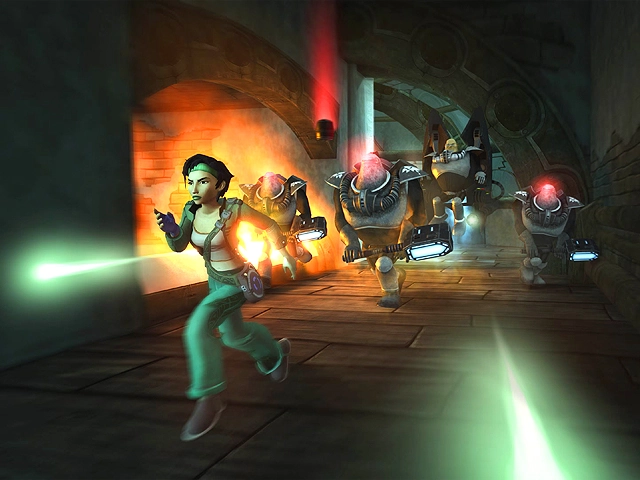
The rooftop chase scene in Beyond Good & Evil is a perfect example of a “playable cutscene” that disrupts the game’s usual pace for a moment of pure adrenaline. The game is usually focused on methodical exploration, puzzle-solving, and stealth. The sudden transition into a high-speed pursuit is a massive tonal shift that catches players off-guard. The stakes are instantly raised, and you’re forced to rely on instinct over planning. Unlike traditional chases that lock the camera behind the protagonist, this sequence uses dynamic cinematography to emphasize the scale and danger. It fluidly transitions from traditional third-person to side-scrolling platforming, front-facing “run-toward-the-camera” shots (reminiscent of Crash Bandicoot), and even dramatic overhead and low-angle shots that make the environment feel massive and oppressive. There are also scripted moments of slow motion during near-misses, with explosions or long leaps mimicking typical hero moments of Hollywood blockbusters. The chase is also thematically appropriate. The environment literally disintegrates around you as you run, and this paints the picture of a collapsing world. Everything is tied together by a driving orchestral theme that elevates the sequence beyond a simple platforming challenge. By removing the complexity of combat and puzzles, the chase focuses entirely on flow. This makes it feel like a special event rather than just another level.
1
Madagascar Chase
Uncharted 4: A Thief’s End
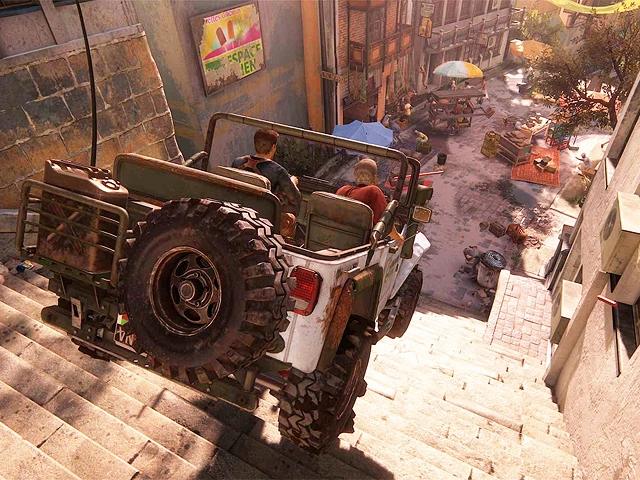
No gaming franchise does a better job of capturing the energy of big-budget Hollywood films than Uncharted. The series is filled with exciting action scenes, but the thrilling Madagascar chase in A Thief’s End is the gold standard because it’s a perfectly choreographed spectacle that remains entirely player-controlled. A lot of games rely on quick time events for big moments, but Naughty Dog keeps you in the proverbial driver’s seat with invisible guidance. Falling debris subtly funnels you toward the correct path without ever taking away your steering, and the armored truck predicts your path so that it will always be seen as a terrifying threat right in your rearview mirror. The sequence feels like a mini-movie, with three distinct acts. It begins with a high-speed downhill plunge through the muddy streets of King’s Bay. It then switches from the Jeep to a grapple hook, and you’ll swing between trucks as you hold on for dear life. The final duel with the armored truck ends in a spectacular, scripted crash. The transitions are seamless, and it never feels like a canned experience since the developers use every trick in the book to make the sequence feel heavy, reactive, and dangerous. The chase also serves as the emotional climax of the brothers’ reunion, and the placement of the obstacles accentuate Nate’s internal panic as he tries to reach Sam.
Published: August 1, 2026
Do you agree with this list? Let us know what you think by leaving a comment below. Your opinion matters!