
Two Sides of the Same Coin
Top 10 Best Video Game Mirror Worlds of All Time!
This list looks at gaming’s greatest mirror worlds. This is an umbrella term that includes altered versions of existing areas. Whether these mirror worlds are classified as parallel dimensions, corrupted reflections, psychological nightmares, or temporal shifts, they prove how much mileage you can get out of a single location. Most of these alternate worlds have been twisted, inverted, or reborn into something new, but this countdown also has room for whimsy. In any regard, this dual-world concept allows for clever environmental puzzles, creative platforming challenges, and mind-blowing plot twists.
10
Flopside
Super Paper Mario
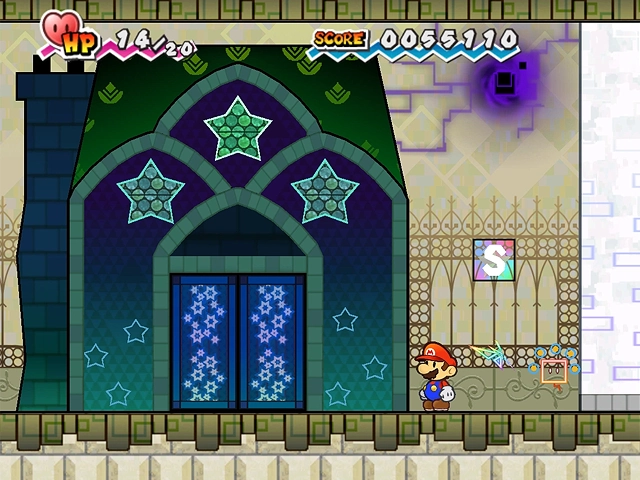
Mario is no stranger to inverted worlds. Supspace from Super Mario Bros. 2, Tiny-Huge Island from Super Mario 64, and many of the Special World courses from Super Mario 3D Land could all be considered mirror worlds in their own right. With that said, Flopside from Super Paper Mario is the most literal interpretation of a mirror world in the series. The layout is a reversed version of the hub town Flipside, and you access the town through an interdimensional mirror. Light cannot exist without darkness, so an ancient tribe apparently created Flopside to prevent the other town from falling into ruin. Flopside has a dilapidated look, the music is transposed down an octave, and the residents all have inverted personalities. If a character in Flipside is known to smile, their Flopside duplicate will wear a frown. The shops and landmarks are noticeably darker in Flopside, and the same could be said of the advice you’re given! The two towns are said to be in perfect balance, but I’m guessing that houses are a lot cheaper in Flopside.
9
Umbral
Lords of the Fallen
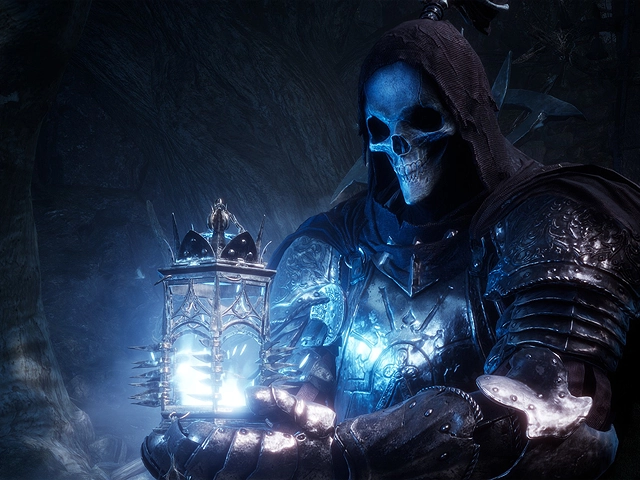
The events of Lords of the Fallen take place within two distinct worlds that are layered on top of one another. Axiom is the realm of the living, while Umbral is a nightmarish mirror world with new enemies, platforms, and secrets. If you die in Axiom, you get a second chance at life by resurrecting in Umbral. (In lieu of dying, you can also peer into the parallel world by using a magical lantern.) Although Umbral is a harsher realm, there are incentives to dive in voluntarily in order to find loot or solve puzzles. The two worlds share the same physical space, but the details differ. A deep lake that blocks your path in Axiom might be completely dried up in Umbral, allowing you to walk across without issue. You’ll likely be hunted by terrifying undead spirits along the way, but that’s par for the course on this countdown. Umbral can be viewed as a corpse-filled safety net, and you’ll spawn there any time you die in Axiom. You’ll be given no such courtesy if you die in the realm of the dead, however, and you’ll instead be sent back to your last save point without any of your unspent experience points.
8
World of the Dead
Guacamelee! Series
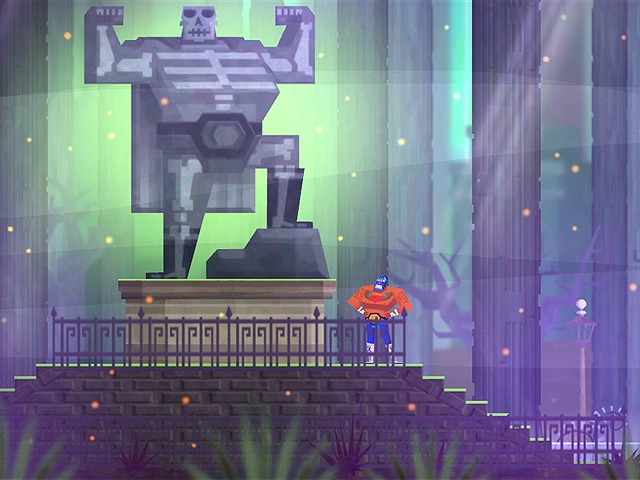
In Guacamelee!, Juan Aguacate can use his luchador powers to swap between the World of the Living and the World of the Dead. Many of the entries on this list deal with fractured timelines or historical divergence, but Guacamelee! uses its worlds as a literal interpretation of Mexican folklore. The two worlds occupy the same physical space, meaning you can stand in a town square in the Living World, flip dimensions, and instantly see the colorful, skeletal ghosts of the town’s ancestors wandering the exact same streets. That being said, Juan’s world-shifting mechanics are primarily used for fast-paced platforming and combat. Walls, platforms, or obstacles that are solid in one world might vanish into a transparent silhouette in the other. The game forces you to chain wall-runs, double-jumps, and special combat moves while rapidly switching dimensions. Missing a shift by a fraction of a second means falling into a pit of spikes or lava. Enemies also exist across both planes, and you’ll often have to break their defenses in one realm before finishing the combo in the other world. In some games, jumping from one dimension to another requires careful planning. Juan doesn’t always have time to plan his next move, however, so he has to rely on reflexes and rhythm in order to survive.
7
Another World
Chrono Cross
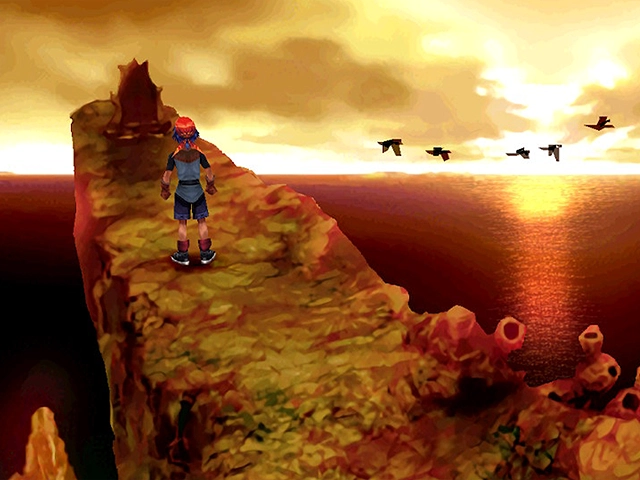
Chrono Cross features alternate worlds set within parallel dimensions. The Home World is the dimension where the protagonist, Serge, survived a near-fatal incident as a young child. Because he lived, his presence caused a massive butterfly effect that altered the political landscape, the environment, and the fates of dozens of people across the El Nido archipelago. In Another World, Serge tragically drowned, so his absence led to a completely different chain of events. While the landmasses look the same, his hometown is more somber, certain relationships never formed, and major political factions took entirely different paths. Many of the characters exist in both worlds, and it’s fascinating to see how the counterparts differ from one another. Serge and his friends can move between worlds at dimensional distortion points, but actions in one world generally don’t affect the other. Instead, you must bring information, items, and your party members from one dimension to the other in order to solve puzzles, unlock paths, and save lives. It should be noted that fate intended for Serge to die in the accident, and his survival essentially tore reality in two. The so-called “Home” World was created as a result of this contradiction, which means that Another World is the original, mathematically correct trajectory for reality.
6
Dark Aether
Metroid Prime 2
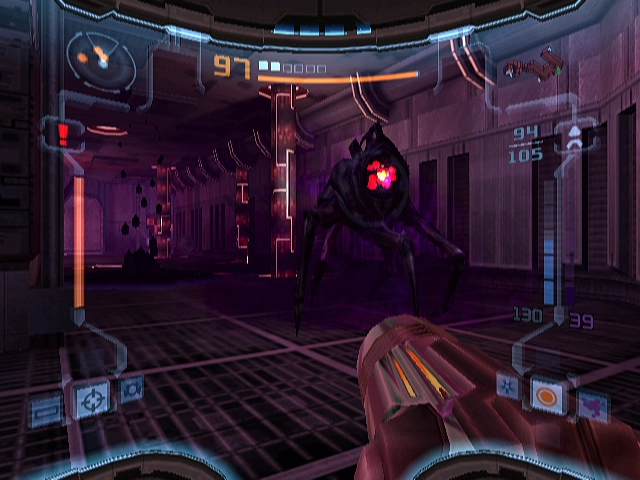
Dark Aether was created after a living meteor crashed into the planet Aether. This created a dimensional rift, and the two planets exist parallel to one another. Rooms, cliffs, and structures exist at the same coordinates in Dark Aether, but they are twisted into toxic, alien versions. The dark planet is inhabited by aggressive shadow beings, and the atmosphere can literally kill anyone who wasn’t born there. Light Beacons act as safe zones, however, and Samus can gain further respite by installing Light Crystals at various locations. Portal generators connect the two worlds, and you’ll have to constantly evaluate how your actions in one dimension alter the physical environment of the other. Activating heavy machinery, raising bridges, or filling chambers with water in the Light World will physically morph or unlock corresponding rooms in the Dark World. The Light Suit will eventually grant total immunity to the dark atmosphere, but the dual-world approach allows for some of the most complex puzzles in the Metroid series. You’ll have to hunt for keys, locate hidden portals, and backtrack extensively through both dimensions to figure out how to unlock the central temple.
5
The Spectral Realm
Soul Reaver Series
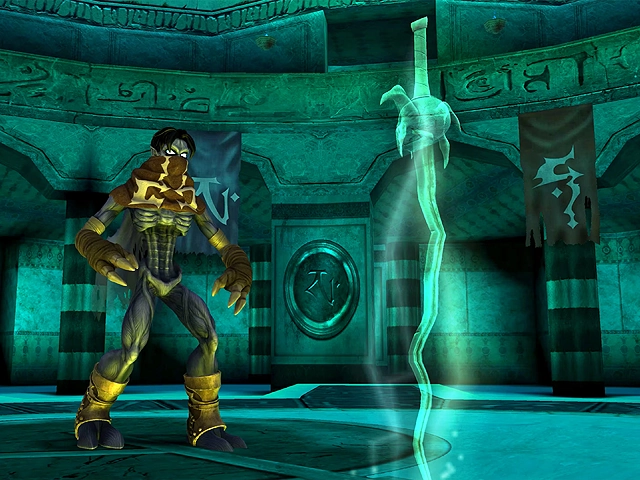
The gameplay in Soul Reaver (and its sequel) largely revolves around Raziel’s ability to shift between the material and spectral planes of existence. Our favorite vampire-turned-wraith can jump to the Spectral Realm at any moment, and he’ll only be able to return to the Material Realm via conduits or portals. Shifting into the Spectral Realm literally bends, stretches, and warps the physical geometry of any given room. A ledge that is too high in the Material Realm might sag down in the Spectral Realm, allowing you to climb it. Water has the density of air in the Spectral Realm, and Raziel will be able to phase through certain gates. Switches can only be manipulated in the Material Realm, however, so Raziel is often required to jump back and forth between the realms in order to solve puzzles or open new paths. Players aren’t provided with a map, so you’ll have to rely on your spatial reasoning and memory if you want to succeed. Some critics felt that the puzzles were too obtuse, but I was impressed by their complexity. I’m not the only one who was impressed, and the developers of Lords of the Fallen cite Soul Reaver as one of their biggest influences.
4
Otherworld
Silent Hill Series
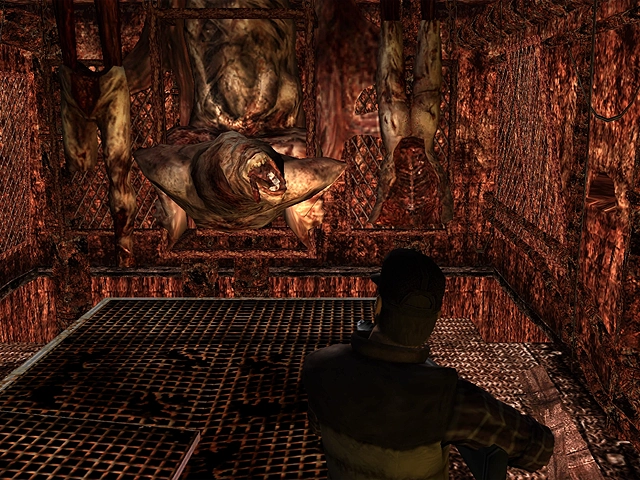
Long before the town of Silent Hill was built, the land possessed a supernatural energy that acted like a psychic mirror. After the area was stained by dark rituals, the buildup of negative energy manifested itself in horrific ways. When a person with deep trauma enters the town, the boundary between physical reality and human consciousness breaks down. The Otherworld takes suppressed guilt and warps reality into a dream-like world made out of rust, blood, and flesh. In some Silent Hill games, entering Otherworld is a narrative device rather than an on-demand gameplay mechanic, but Silent Hill: Origins changed the formula by giving you control over the shift. In either regard, Otherworld could be likened to a mirror that changes its reflection based on who is looking into it. Its visual aesthetic, layout, and purpose changes completely based on who is hosting the nightmare, and that’s what makes Otherworld so interesting. Even though the lore states that it’s a psychic manifestation, visitors experience Otherworld as though it were a physical realm. Rest assured, a mirror world based on internal trauma is more intriguing than a mirror world that simply swaps out the color pallet.
3
Click Clock Wood
Banjo-Kazooie
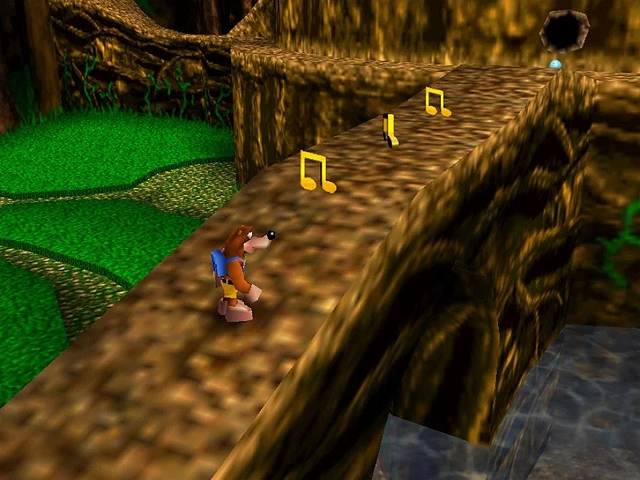
Most of the entries on this list deal with parallel worlds, but Click Clock Wood lets you visit the same location in four distinct seasons! The core geography stays consistent, but the visuals, puzzles, and story progression are informed by the temporal shifts. The central hub has four doors leading to Spring, Summer, Autumn, and Winter versions of the same area. New shortcuts and pathways are opened depending on the season, and your actions have lasting consequences. Several multi-season side quests require you to complete tasks across the entire year. Whether you’re nurturing a sprout into a giant flower or feeding a growing eagle, it’s always interesting to see how things unfold. Tree branches grow in the summer, leaves pile up in the fall, and water freezes over in the winter. Many collectibles will only be reachable in specific seasons, so the stage rewards observation and backtracking in a satisfying way. One of the best things about Click Clock Wood is the dynamic soundtrack. While the core melody remains the same, the arrangement, tempo, and instruments match the mood of each season. Spring features an upbeat tempo with bouncy woodwinds, chirping sounds, and light strings to convey a feeling of new life and growth. By the time winter arrives, the music changes to a minimal arrangement filled with bells and chimes. I’ll concede that Click Clock Wood isn’t the most obvious candidate for this countdown, but it’s one of the most creative implementations of the mirror world concept.
2
The Dark World
The Legend of Zelda: A Link to the Past
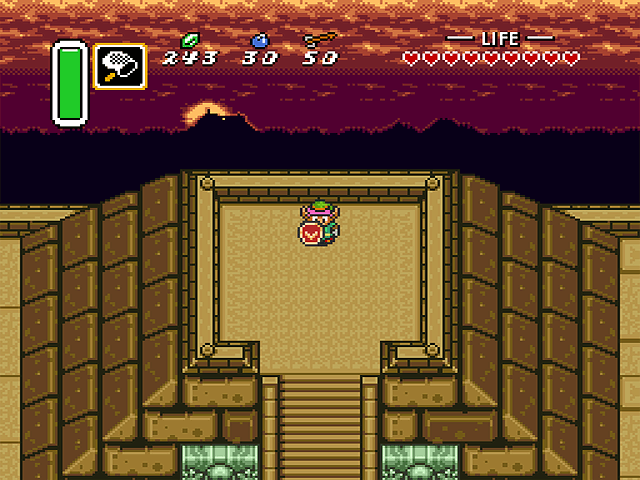
The Dark World is a corrupted parallel dimension of Hyrule. Originally known as the Sacred Realm, it was transformed into a nightmare landscape when Ganondorf claimed the Triforce. Incidentally, his evil desires twisted the realm to reflect his dark heart. Everything in the Dark World is a distorted reflection of the Light World, and the layouts perfectly mirror one another. The locations in the Dark World are dilapidated and dangerous, however. The friendly Hyrule Castle is replaced by the imposing Pyramid of Power, for example, and the peaceful Kakariko Village becomes the hostile Village of Outcasts. Link can enter the Dark World by finding hidden portals throughout Hyrule, and the Magic Mirror allows him to return to the Light World at any time. Since actions taken in one world directly affect the other, Link must constantly switch between realms in order to bypass obstacles and progress through his adventure. Dual-world mechanics are commonplace in the Zelda series. Twilight Princess gave us the Twilight Realm while A Link Between Worlds let us explore the Land of Lorule. The Dark World from A Link to the Past created the foundation, and it established multi-dimensional puzzles as a core component of the series.
1
The Inverted Castle
Castlevania: Symphony of the Night
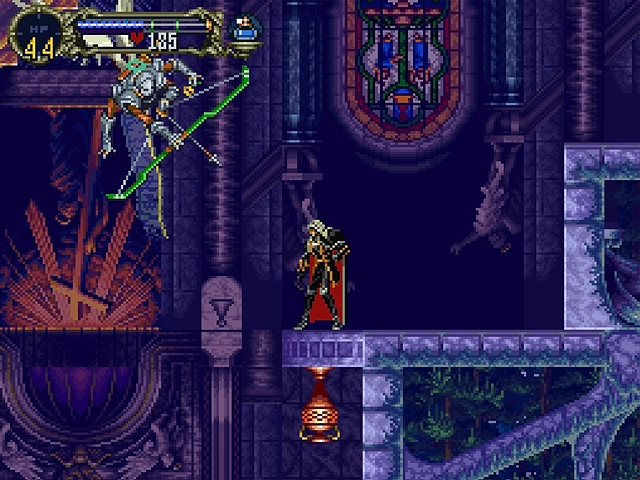
In Castlevania: Symphony of the Night, Alucard returns to Dracula’s demonic castle to prevent his father from regaining his power. A famed vampire hunter named Richter Belmont claims to be the new lord of Castlevania, and Alucard has the option of defeating him outright. By obtaining a pair of holy glasses, he’ll discover that Richter was being controlled by a dark priest all along. If Alucard defeats this evil entity, a second castle will emerge from the heavens and park itself directly above Castlevania. The inverted castle is nearly identical to the original, but the layout is flipped upside-down. Ceilings become floors, and you’ll have to fundamentally change the way you progress through each room. The second castle contains tougher enemies and a litany of new items to discover, and it effectively doubles the length of the game by forcing you to re-learn the spatial geometry of the entire map. You can potentially “finish” the game without laying eyes on the second castle, but exploring the inverted castle will give you a newfound appreciation for how much care and attention went into the game. Decades later, it’s still regarded as one of gaming’s greatest secrets.
Published: August 18, 2026
Do you agree with this list? Let us know what you think by leaving a comment below. Your opinion matters!